
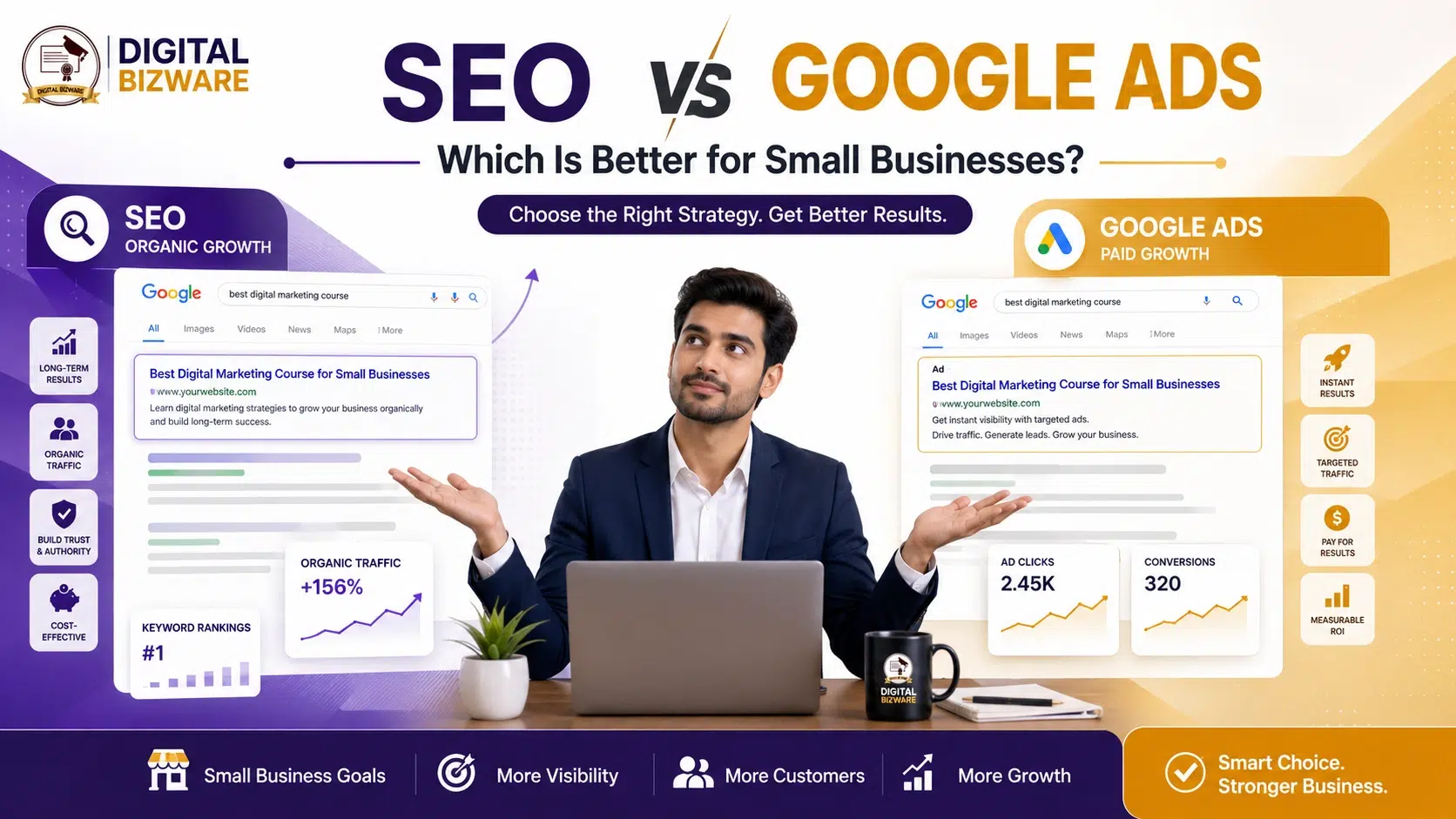
SEO vs Google Ads: Which Is Better for Small Businesses?
Introduction
For a small business, every marketing rupee matters. So, should you invest in SEO or Google Ads? The honest answer is: it depends on your goals, budget, competition, and how quickly you need results.
If you’re exploring a Digital marketing course in thane, understanding this difference can help you make smarter marketing decisions instead of blindly spending money on advertisements.
SEO focuses on building long-term organic visibility, while Google Ads helps businesses appear in front of potential customers almost immediately.
SEO vs Google Ads: What’s the Difference?
SEO for Small Businesses
Search Engine Optimization improves your website’s visibility in unpaid search results. It includes keyword research, quality content, technical SEO, backlinks, local SEO, and user experience.
The biggest advantage is sustainability. Once your website earns strong rankings, it can continue attracting visitors without paying for every click.
However, SEO usually takes time. Depending on your industry and competition, meaningful results may require consistent effort over several months.
Google Ads for Small Businesses
Google Ads is a paid advertising platform where businesses bid to display advertisements for relevant search queries.
For example, a local training institute could target searches related to digital marketing courses. When someone searches with strong purchase intent, an ad can appear at the top of the results.
The major benefit is speed. You can launch a campaign, set a budget, and start receiving targeted traffic quickly.
Which Strategy Is Better for Small Businesses?
There isn’t one universal winner.
SEO is generally better for long-term growth, brand visibility, and sustainable organic traffic. Google Ads is better when you need immediate visibility, leads, or sales.
A smart small business can use both. Google Ads can generate immediate opportunities while SEO gradually builds a stronger organic foundation.
Key Benefits of SEO
Key Benefits of Google Ads
The Smartest Approach: Combine SEO and Google Ads
Instead of treating SEO and Google Ads as competitors, consider them complementary strategies.
For instance, Google Ads can help you identify keywords that generate clicks and conversions. Those insights can later guide your SEO content strategy.
At the same time, SEO can build organic visibility for keywords that may become expensive to target through paid advertising.
A Practical Strategy for Beginners
Start with Google Ads if you need quick leads and have a clearly defined budget.
At the same time, invest consistently in SEO so your business doesn’t remain completely dependent on advertising costs.
Learn the Fundamentals
Businesses and aspiring marketers can strengthen their SEO knowledge through a Certified SEO Course in Thane.
Build Practical Skills
Learning keyword research, on-page SEO, technical optimization, local SEO, and analytics makes it easier to create strategies based on actual business goals.
Develop Paid Advertising Skills
For businesses that want faster campaign results, understanding Google Ads, bidding, targeting, conversion tracking, and campaign optimization is equally valuable.
Challenges to Consider
SEO’s biggest challenge is patience. Rankings aren’t guaranteed, and competitive industries require consistent optimization.
Google Ads, meanwhile, can become expensive if campaigns aren’t managed properly. Poor keyword selection, weak landing pages, and ineffective ad copy can quickly waste a budget.
Therefore, strategy matters more than simply choosing one channel.
Future of AI in Digital Marketing
AI is changing how marketers approach both SEO and paid advertising. Businesses can now use AI to identify content opportunities, analyze search intent, generate campaign ideas, study customer behavior, and improve reporting.
However, AI shouldn’t replace human judgment. Successful marketing still requires creativity, accurate information, strategic thinking, and a genuine understanding of customers.
For anyone considering a Digital marketing course in thane, learning how to use AI alongside traditional SEO and advertising skills can create a powerful competitive advantage.
FAQs: Use of AI in Digital Marketing
1. How is AI used in SEO?
AI can help marketers analyze keywords, understand search intent, identify content gaps, organize information, and support content optimization.
2. Can AI manage Google Ads campaigns?
AI-powered features can assist with bidding, targeting, recommendations, and campaign optimization. However, marketers should monitor performance and make strategic decisions.
3. Will AI replace SEO professionals?
Not completely. AI can automate repetitive tasks, but human expertise is still important for strategy, creativity, quality control, and understanding business objectives.
4. Is AI useful for small businesses?
Yes. AI can help small businesses save time, analyze marketing data, create ideas, and improve campaign workflows without requiring a large marketing team.
5. Should beginners learn AI with digital marketing?
Absolutely. Combining SEO, Google Ads, analytics, content marketing, and AI tools can help beginners develop more relevant and practical digital marketing skills.
Conclusion
So, SEO vs Google Ads isn’t really about choosing a permanent winner. SEO builds long-term authority and organic visibility, while Google Ads provides speed and targeted reach.
The strongest strategy is often a balanced one: use paid campaigns to generate immediate opportunities while building SEO assets that can deliver value for years.
If you want to turn these concepts into practical skills, explore a Digital marketing course in thane and learn how SEO, Google Ads, content, analytics, and AI work together.
Ready to Build Your Digital Marketing Skills?
Don’t wait until your competitors dominate the search results. Start learning practical digital marketing strategies and understand how to turn search visibility into real business growth.
Explore Digital Bizware to learn more, check the Google Ads Certification Course in Thane, or contact Digital Bizware to take the next step toward building job-ready digital marketing skills.