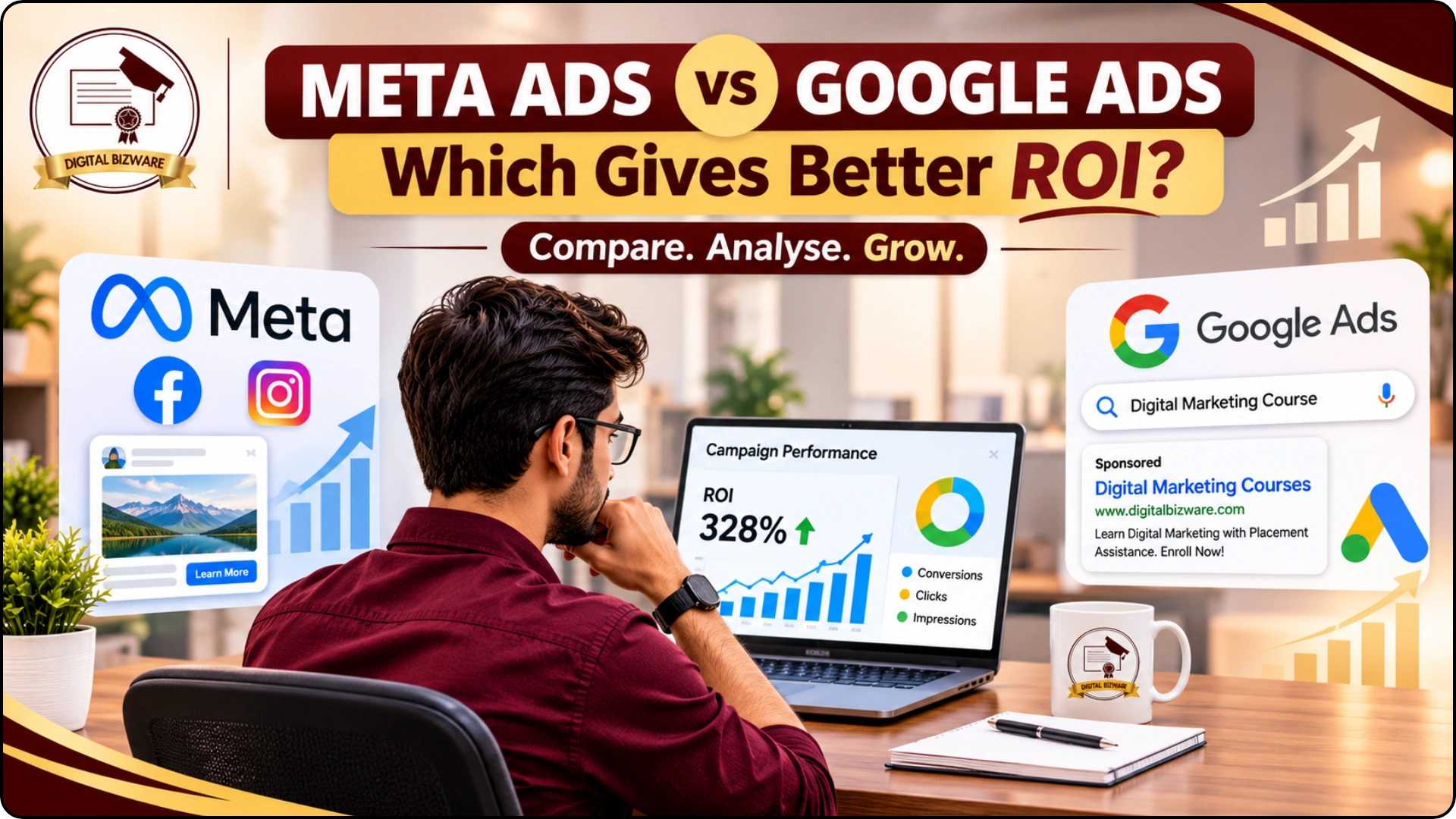
Meta Ads vs Google Ads: Which Gives Better ROI?
Introduction
Imagine running a business and having ₹10,000 available for online advertising. Would you spend it on Instagram and Facebook promotions or invest it in Google Search advertisements?
This is where the discussion around Meta Ads vs Google Ads becomes important. Both platforms can bring customers to your business, but the way they attract people is quite different.
One introduces your brand to people who might need your product, while the other helps you connect with people already looking for something similar.
Understanding this difference can help businesses avoid unnecessary advertising expenses and make smarter marketing decisions.
Understanding Meta Ads: Marketing Beyond Search
Meta Ads allow businesses to advertise across Facebook, Instagram, Messenger and other available placements.
What makes this platform interesting is its ability to introduce products and services to people based on their interests, activities and audience characteristics.
Consider a clothing store launching a new collection. Instead of waiting for customers to search for its products, the store can display attractive reels and promotional creatives to people interested in fashion.
This approach helps businesses generate curiosity, build recognition and encourage potential customers to explore their offerings.
Before launching a campaign, businesses should understand how different advertising objectives influence their results. Meta provides learning resources through Meta Blueprint, where advertisers can explore campaign objectives, audience strategies and advertising techniques. Businesses looking to develop these skills professionally can also explore the Digital Marketing Course in Thane at Digital Bizware, which covers practical digital marketing concepts and advertising platforms.
Understanding Google Ads: Reaching Customers With Intent
Google Ads works differently, particularly when it comes to Search campaigns.
Think about someone searching for “best digital marketing classes in Thane”. This person is already exploring training options and may be closer to making an enquiry.
A relevant advertisement can introduce a suitable institute directly within the search results.
Google also offers advertising opportunities through YouTube, Display and other networks, allowing businesses to connect with audiences at different stages of their buying journey.
Running advertisements is only one part of a successful Google Ads strategy. Businesses must also understand which campaigns generate meaningful enquiries and customer actions. According to Google’s official Conversion Measurement guide, conversion tracking helps advertisers measure valuable interactions resulting from their campaigns. If you want to understand campaign setup, keyword targeting and performance optimisation, explore the Google Ads Course in Thane offered by Digital Bizware.
Meta Ads vs Google Ads: 7 Important Factors to Compare
1. How Each Platform Finds Customers
Meta Ads primarily help businesses discover potential customers through audience targeting and engaging content.
Google Search Ads connect advertisers with users based on their search queries and related intent.
For a newly launched skincare brand, Instagram promotions could introduce its products to interested audiences. Meanwhile, Google Search Ads could attract people specifically looking for skincare products.
2. Advertising Budget and Expenses
There is no fixed price for advertising on either platform.
Meta campaign expenses depend on factors such as audience competition, creative quality, campaign objective and bidding.
Google Ads expenses are influenced by keyword competition, bidding strategies, quality and market demand.
A lower cost per click might look attractive, but the real question is whether those visitors become paying customers.
3. Quality of Leads
Getting 100 enquiries does not necessarily mean a campaign is successful.
Imagine two advertising campaigns. The first generates 50 enquiries, but only two people purchase. The second generates 15 enquiries, out of which eight become customers.
The second campaign delivers more valuable business results despite generating fewer leads.
Meta and Google can both produce quality leads. However, audience intent, advertisement messaging and follow-up processes influence the outcome.
4. Creative Opportunities
Meta provides plenty of opportunities to experiment with reels, stories, carousel advertisements and promotional images.
This makes it useful for businesses selling products that benefit from visual presentation.
Google Search advertisements, on the other hand, focus on relevant messaging, search queries and compelling calls to action.
The creative approach should match the platform rather than using identical advertisements everywhere.
5. Building Brand Recognition
A potential customer may not know that your business exists.
Meta advertising can introduce your brand through repeated exposure to relevant audiences. This is particularly helpful when launching a new product or entering a competitive market.
Google can also support brand visibility through Search and Display campaigns.
6. Bringing Back Interested Visitors
Not everyone purchases during their first website visit.
Both platforms offer ways to reconnect with eligible audiences who previously interacted with your business.
For instance, someone who visits a course page but leaves without submitting an enquiry may later see a relevant advertisement.
This gives businesses another opportunity to communicate their benefits and encourage action.
7. Tracking Advertising Performance
Advertising decisions should come from actual campaign data rather than assumptions.
Both platforms provide reporting features that help advertisers evaluate clicks, conversions and campaign expenses.
Connecting suitable analytics and conversion tracking tools makes it easier to understand which campaigns are contributing to enquiries and sales.
Which Platform Delivers Better ROI?
The answer depends on what you sell and how customers make purchasing decisions.
Google Search Ads may be a stronger option when people already know what they need. Meta Ads may be more suitable when your objective is to introduce an offering and create interest.
For example, a digital marketing institute can use Google Ads to attract people searching for professional courses. At the same time, Instagram advertisements can showcase classroom activities, student projects and learning experiences.
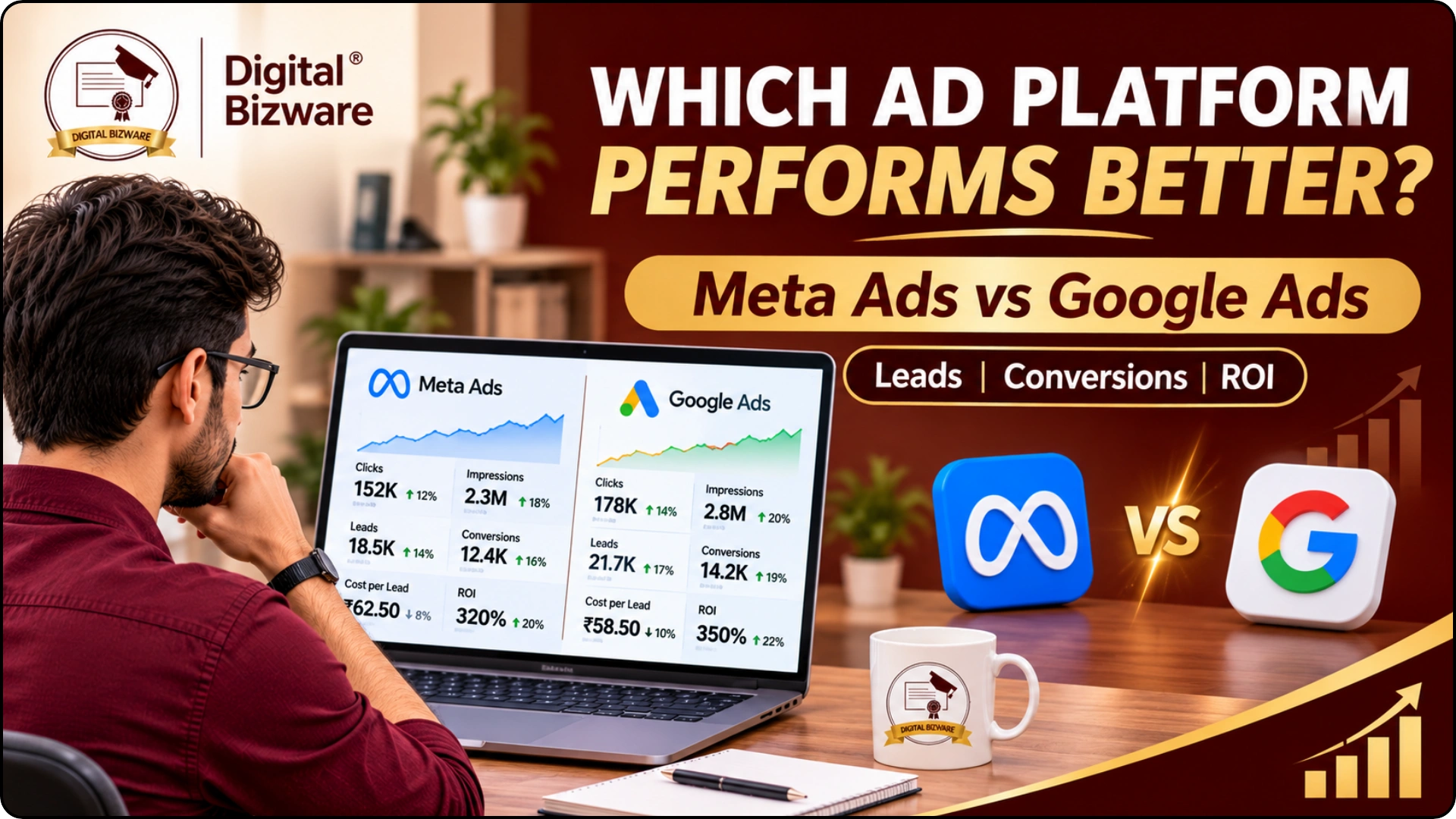
To evaluate Meta Ads vs Google Ads ROI, businesses should track actual conversions and revenue.
Instead of treating these platforms as competitors, businesses can use them to support different stages of the customer journey.
Major Benefits of Using Paid Advertising
Why Businesses Choose Meta Ads
- Promotes products through engaging visual content.
- Helps discover audiences interested in specific categories.
- Supports lead forms and messaging campaigns.
- Creates opportunities for remarketing.
- Helps introduce new products to potential buyers.
Why Businesses Choose Google Ads
- Connects businesses with relevant search queries.
- Helps attract customers actively researching solutions.
- Provides multiple campaign formats.
- Supports conversion measurement and optimisation.
- Allows advertisers to control budgets and bidding strategies.
- Choosing between Meta Ads vs Google Ads depends on your business objectives.
Common Advertising Mistakes to Avoid
Even a well-funded advertising campaign can underperform when basic mistakes go unnoticed.
Some common problems include:
- Targeting audiences without understanding their requirements.
- One common mistake in Meta Ads vs Google Ads campaigns is focusing only on clicks instead of conversions.
- Sending advertisement traffic to irrelevant landing pages.
- Using attractive creatives with unclear messaging.
- Ignoring enquiry quality while measuring campaign success.
- Failing to review conversion tracking.
- Continuing campaigns without analysing performance.
Regular testing and optimisation help businesses identify what deserves their advertising budget.
Frequently Asked Questions
1. Should a small business start with Meta Ads or Google Ads?
It depends on the business. Meta can help introduce products to new audiences, while Google Search can attract people actively looking for specific services.
2. Can Meta Ads generate sales without a website?
Yes. Businesses can use suitable lead forms and messaging campaigns to receive enquiries without necessarily having a website.
3. Why do Google Ads sometimes become expensive?
Competitive keywords, bidding pressure, industry demand and campaign relevance can influence advertising expenses.
4. Is it necessary to learn both advertising platforms?
Learning both gives digital marketers a wider understanding of audience targeting, campaign planning, lead generation and performance measurement.
5. How can businesses improve their advertising ROI?
Businesses should improve audience selection, test advertisements, optimise landing pages, monitor conversion data and focus on generating valuable customers rather than just clicks.
Conclusion
Choosing between Meta Ads and Google Ads is not simply about finding the platform with the lowest advertising cost. It is about understanding customer behaviour and investing in the right marketing approach.
Ultimately, Meta Ads vs Google Ads is not about choosing one universal winner but selecting the platform that suits your goals.
A business looking for immediate search enquiries may benefit from Google Ads, while a brand trying to introduce its products to new audiences may find Meta Ads more useful.
The biggest advantage comes from knowing when and how to use each platform.
Want to turn your interest in advertising into a valuable professional skill?
Digital marketing offers exciting opportunities for individuals who understand how businesses attract customers online.
At Digital Bizware, you can learn practical concepts related to Meta Ads, Google Ads, SEO, social media marketing and performance marketing.
Build your knowledge, practise campaign strategies and take a confident step towards your digital marketing career.
Explore Digital Marketing Courses at Digital Bizware and start building skills that businesses value!